After a Dallas hailstorm, many homeowners do the obvious check: they look for missing shingles, dents in gutters, or branches on the ground. But hail damage is often subtler than that. It can show up in places you do not notice from the driveway, and waiting too long to inspect it may make a small problem harder to document later.
If you want a better first look at your roof, focus on the signs that are easy to miss. You do not need to climb onto the roof to spot many of them. In fact, a careful ground-level check with binoculars, plus a look in the attic and around the exterior trim, can reveal more than a quick glance from the yard.
1. Soft bruises on shingles, not just obvious cracks
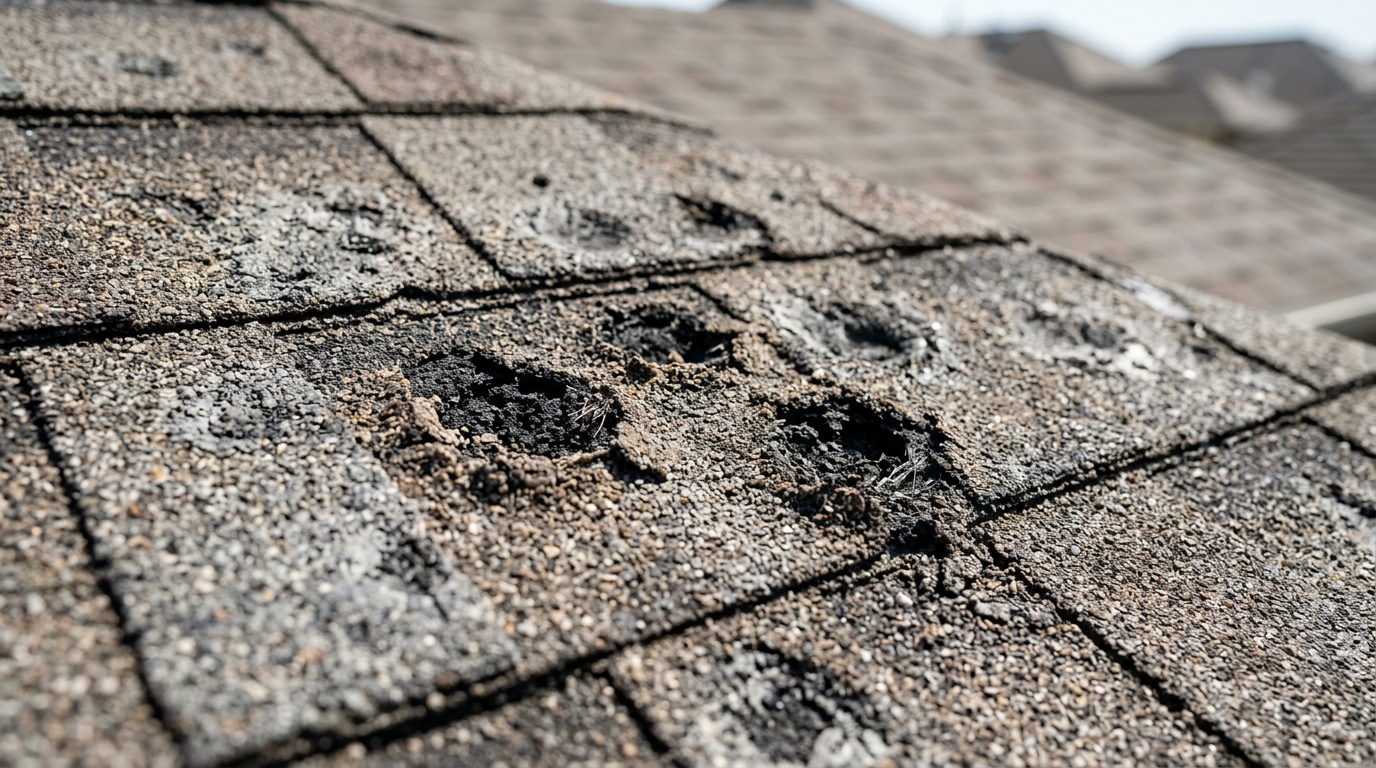
One of the most overlooked signs of hail damage is a soft bruise on an asphalt shingle. Unlike a clean break, bruising may look like a dark spot, a shallow dent, or a patch that feels spongy when pressed by a professional. These impacts can weaken the shingle even if it still looks intact from below.
Why homeowners miss it: bruises do not always stand out unless the light is right. On some roofs, especially darker ones, the mark blends into the shingle color. You may only notice irregular texture or a slightly sunken area when the roof is viewed from an angle.
What to look for:
- Dark, circular marks on shingles
- Small areas that look flattened or dented
- Shingles that seem to have lost surface texture in one spot
2. Granule loss that collects in gutters and downspouts
Hail can knock the protective granules off asphalt shingles. That loss is easy to miss on the roof itself, but it may leave evidence in your gutters, at the base of downspouts, or on walkways below roof edges. A little granule shedding after a storm can be normal on an older roof, but fresh, noticeable buildup after hail is worth paying attention to.
Granules protect shingles from sun exposure. When they are stripped away, the roof may age faster in the damaged areas. That does not mean every granule in a gutter points to hail, but it does mean the roof should be checked more closely for impact marks.
Tip: If it is safe to do so, look for loose granules in downspouts and at splash blocks after a storm. That clue is often easier to spot than the shingle damage itself.
3. Dented metal fixtures and trim around the roof
Homeowners often focus on shingles and forget the metal parts of the roof system. Hail can dent flashing, ridge caps, vents, chimney caps, drip edges, and even attic fan housings. These parts may not leak immediately, so damage can be missed until the next heavy rain.
Metal damage matters because it may indicate the storm was strong enough to hit other roof components too. If the soft metals on the roof are dented, the shingles may also have been affected, even if the damage is harder to see. Check any exposed metal from the ground with a close look at edges, vents, and pipe collars.

Common places homeowners overlook
- Roof vents and turbine vents
- Metal flashing around chimneys and skylights
- Gutters, downspouts, and gutter guards
- Window screens near the roofline
- Air-conditioning fins and outdoor fixtures below the roof
4. Subtle changes around skylights, chimneys, and roof edges
Hail damage does not always appear in the center of the roof. It often shows up around transitions, where materials meet. The edges near skylights, chimneys, valleys, and dormers can hide cracked seals, bent flashing, or loose shingles. These are exactly the areas homeowners tend to skip because they are harder to inspect from the ground.
If you notice staining, lifted shingle edges, or small gaps in the sealant around these features, do not assume it is normal wear. Hail can jolt these weak points and create an opening for wind-driven rain. Even minor separation may deserve a closer look by a qualified roofer.
A useful habit after a storm is to compare each roof section mentally: does one side look different from the other? Uneven wear or a change in the way light reflects off the shingles can sometimes reveal impact damage before a leak starts.
5. Water spots or attic moisture that appear days later
Not every hail strike leads to an immediate leak. Sometimes the first sign is a faint water spot on a ceiling, a musty smell in the attic, or damp insulation after the weather has already cleared. This delay is one reason hail damage can be tricky for Dallas homeowners. A roof may look fine at first, but loosened shingles or damaged flashing can let water in later during another rain.
Check the attic after a major storm if it is safe and accessible. Look for:
- Wet insulation
- Dark stains on the roof decking
- Daylight coming through small openings
- Musty or damp odors
If you see signs of moisture, document them before making repairs. Photos can help create a clear record of what changed after the storm.
What to do next if you suspect hail damage
Start with a calm, methodical review rather than rushing to replace anything. Take photos of the roof, gutters, vents, and any interior staining. Note the date of the storm and any visible changes you observed afterward. If you can safely do so, keep a sample of granules from the gutter or a close-up image of the affected areas.
Then get more than one opinion. A reputable roofing contractor can help you determine whether the marks look like hail, aging, or a different kind of wear. If you are comparing contractors, ask whether they document findings with photos, explain which areas they inspected, and provide a written summary you can keep for your records.
For Dallas homeowners, the key is not to wait for a major leak before taking hail seriously. The most important signs are often the quiet ones: bruises, granule loss, dented metal, subtle edge damage, and delayed moisture problems. If you are unsure what you are seeing, compare your options and choose a roofer who will give your roof a careful, plain-English assessment.